The New Politics: What Did Democrats Change in 2026?


When I first started talking about this, a lot of my friends said it would never happen. But most of them were still reading politics through the old equations: move toward the center, don’t take risks, tone down your identity, don’t trust young voters too much, small donors can’t compete with big money, and a candidate who is “too progressive” can’t win in a swing state.
What I was seeing was based on a different dynamic: clarity + authenticity + economic issues + organization + youth mobilization.
I thought that combination could disrupt the conventional calculation of “electability.” And Michigan, at the very least, showed that this theory can work in a very serious way.
To be fair, my friends had reasons to say “no way.” The historical data genuinely called for caution. Michigan is a swing state. El-Sayed was openly progressive. He was subjected to aggressive attacks over his Muslim identity, and some of his positions carried obvious risks with moderate voters.
So my prediction wasn’t the safe one.
It was the one that noticed changing political behavior early.
A terrible habit of mine. I’m always early.
“Months ago, when I said El-Sayed could win Michigan, almost everyone around me said the same thing: Impossible. Too left-wing, too risky, Muslim, Michigan is too centrist. Maybe that was exactly the problem. We were still reading politics through outdated definitions of electability.”
The first and easiest explanation of the November 3, 2026 elections would be this: Americans were angry with Donald Trump and voted for Democrats.
That isn’t wrong.
But it isn’t enough either.
Things are never that simple, darling.
Democrats didn’t just take back the House of Representatives. They also won the Senate. And they didn’t do it only by performing well in safe Democratic territory like New York, California or Massachusetts.
They flipped Senate seats in states such as Texas, Kansas, South Carolina, Iowa, Ohio and North Carolina — places where Democratic Senate victories would have looked extremely difficult only a few years ago.
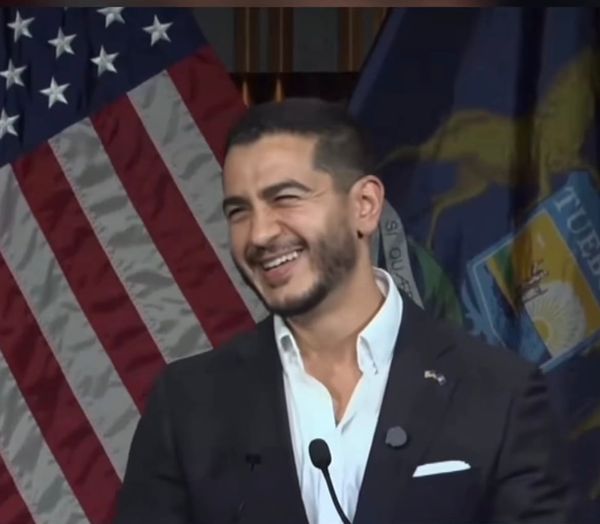
In Michigan, Abdul El-Sayed won the Senate race.
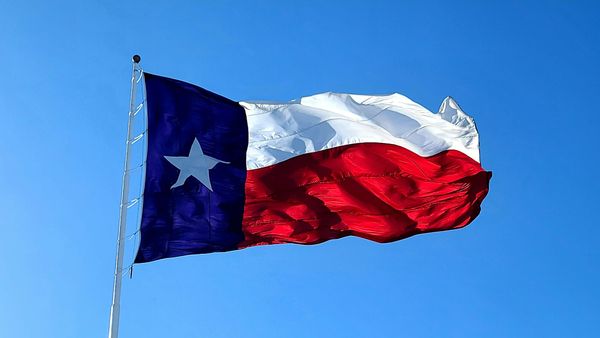
In Texas, James Talarico flipped a Republican seat.
In Kansas, Adam Hamilton did the same.
These are very different political figures.
So this isn’t simply a “blue wave.”
Something more interesting is happening in American politics.
What we might call a new generation of politics is beginning to reveal itself.
And the most striking thing about it is this:
The new politics does not belong to a single ideology.
Being Progressive and Being New Are Not the Same Thing
Abdul El-Sayed was openly progressive in Michigan.
He supported Medicare for All. He made the political influence of large corporations a central issue in his campaign. He broke with the Democratic Party’s traditional position on Israel. And in the primary, he defeated Haley Stevens, the candidate backed by the party establishment.
Adam Hamilton, elected in Kansas, represented a very different profile.
He was the founding pastor of a Methodist megachurch and positioned himself as a more centrist Democrat capable of thinking independently from the party.
Yet he also spoke about the health care system, the cost of living, cuts to food assistance and the everyday consequences of Trump administration policies.
He delivered Kansas Democrats their first Senate victory in 94 years.
James Talarico in Texas represented yet another political character.
He spoke openly about faith, economic inequality and the power of billionaires to buy elections, while communicating with younger voters in an extremely contemporary political language.
And in Texas — a state where Republicans had been accustomed to winning statewide elections for more than three decades — he delivered a Senate seat to the Democrats.
So the result does not tell us:
“Move left and you win.”
It does not tell us:
“Move to the center and you win.”
It tells us something more interesting:
Before voters understand your ideological position, they need to understand your political character.
Maybe that is where the new politics begins.
People Want to Know Where Politicians Actually Stand
For years, the electoral strategy of centrist parties was built around one idea:
Offend as few people as possible.
Sand down your sentences.
Avoid controversial issues.
Speak in a way that resembles everybody a little.
And ideologically, stay as close to the middle as possible.
The logic was obvious.
Elections are won by persuading the undecided voter in the center.
But politics in recent years has revealed another problem:
A candidate who looks a little like everybody may eventually look like nobody at all.
Voters do not have to agree with every position a politician takes.
But they increasingly seem to want to know what that politician actually believes.
That was one of El-Sayed’s strengths in Michigan.
He said Medicare for All.
He wanted corporate money out of politics.
He advocated greater redistribution through the tax system.
He did not hide his position on Israel.
Voters could agree or disagree.
But it was difficult to say they did not understand what El-Sayed believed.
In modern political communication, that has become a considerable advantage.
The Economy Returned to Real Life
This may be the most important data point of the 2026 election.
The AP Voter Poll, which surveyed roughly 80,000 voters, showed that the economy was one of the dominant issues of the election.
Roughly four in ten voters described the economy as the country’s most important problem.
About half said the cost of living and their perception of corruption in government were very important factors in their congressional vote.
Reuters found the same pattern in its post-election analysis: nearly nine in ten voters considered the cost of living important, and roughly two-thirds blamed Trump for high prices.
But Democrats made an important change in how they talked about the economy.
They stopped talking about it only through macroeconomic statistics.
“What is the growth rate?”
“What is unemployment?”
“Where is inflation?”
Those questions were replaced by simpler ones.
How much does your grocery shopping cost?
Can you pay your rent?
What happens when the medical bill arrives?
How much does child care cost you?
How much is gas?
This may look like a communication difference.
It is actually a political difference.
Because citizens do not experience the economy as a CPI chart.
They experience it in the refrigerator.
Texas Made This Very Clear
Democrat Gina Hinojosa winning the Texas governorship may be one of the most striking examples of this shift.
Republicans had controlled the Texas governorship for roughly three decades.
Hinojosa centered her campaign particularly on the cost of living and the economic pressure on public schools.
According to Reuters’ post-election analysis, her campaign tried to reach Latino voters not primarily through cultural identity, but through economic interests.
That matters.
Because for several years, one of the accepted narratives in American politics was that Latino voters were becoming more conservative.
The 2024 election strengthened that thesis.
In 2026, a significant portion of those same voters moved back toward Democrats.
According to the AP Voter Poll, roughly 60 percent of Latino voters supported Democratic candidates in House races.
That tells us something important:
Treating voter groups as permanent ideological blocs is a serious mistake.
“Latino voters are conservative now.”
“Young people are moving left.”
“The working class is Republican now.”
All of these statements may appear true at a particular moment.
But voter identity is not frozen.
When politics changes, voters change too.
Young Voters Came Back
One of the most worrying developments for Democrats in 2024 was the weakening of young voters’ attachment to the party.
In 2026, that trend appears to have reversed sharply.
According to the AP Voter Poll, roughly 70 percent of voters under 30 supported Democrats in House races, compared with approximately 30 percent for Republicans.
In 2024, the youngest voters had been almost evenly divided between Trump and Kamala Harris.
Obviously, attributing this entire change to TikTok would be ridiculous.
But how politicians speak to young voters matters.
Many of the new-generation candidates are not simply giving young people “youth policies.”
They enter the communication world young people already inhabit.
El-Sayed’s Michigan campaign was a good example.
His campaign connected social media humor, popular culture and internet language with policy content.
But social media was not merely a visibility mechanism.
The campaign also organized physically on university campuses.
And this is exactly where the new politics separates itself from the old version of social-media politics.
A viral video is not organization.
When the person who watched that video knocks on doors the next day, makes phone calls and then goes to vote — that is organization.
Digital Politics Reconnected With the Street
Perhaps one of the biggest mistakes of the last decade was treating digital politics as a substitute for organization.
Follower counts were mistaken for party organization.
Likes were mistaken for votes.
Viral videos were mistaken for political movements.
El-Sayed’s campaign reminded us of a much older political truth:
You still have to talk to people.
During the primary, the campaign organized hundreds of events, mobilized tens of thousands of volunteers, knocked on hundreds of thousands of doors and made phone calls approaching the millions.
AP’s pre-election profile of El-Sayed’s rise also emphasized how the campaign grew across Michigan from small local meetings into a statewide organization.
Technology did not replace organizing.
It multiplied it.
To me, this is one of the most important differences in the new politics.
Digital visibility + physical organization.
One without the other is not enough.
Big Money No Longer Guarantees Automatic Superiority
The Michigan primary was almost a laboratory experiment for this.
El-Sayed’s rival, Haley Stevens, enjoyed dramatically greater advertising support and outside spending.
El-Sayed won anyway.
But the interesting part is not simply that “money lost.”
El-Sayed managed to incorporate his opponent’s financial advantage into his own political narrative.
His campaign was already arguing that big money controlled politics.
Then enormous amounts of outside money arrived behind his opponent.
The attack therefore began to look like evidence for El-Sayed’s argument.
This points to another characteristic of the new politics:
The ability to absorb your opponent’s attack into your own narrative.
And by the way, this is also one of Gökhan Günaydın’s tactics.
I’ve told you about that before.
From a communications perspective, it is extremely powerful.
Authenticity Is No Longer the Opposite of Professionalism
One of the first things you notice when watching El-Sayed is that he does not hide his emotions.
Sometimes he is angry.
Sometimes excited.
Sometimes he speaks too quickly.
Sometimes he becomes harsher toward an opponent than he probably should.
Traditional political consulting would try to sand away most of these things.
The new approach makes a different calculation.
An overly controlled politician may be safe.
But they may also be forgettable.
El-Sayed is not alone.
Talarico speaking openly about his religious faith, Hamilton refusing to separate his identity as a pastor from his political personality, or Mamdani in New York refusing to hide his ideological positions are all different expressions of the same political shift.
Authenticity here does not mean “being likable.”
It means that voters see consistency between what you say, your political history, your personality and your behavior.
That is why a politician who occasionally says something imperfect but clearly believes what they are saying can sometimes be more effective than someone who delivers every sentence flawlessly but leaves voters wondering what they actually believe.
Identity Politics Did Not Disappear. It Changed Form.
It would also be wrong to read the 2026 results as evidence that “identity politics is dead.”
Quite the opposite.
The elections produced numerous historic firsts in Congress and state governments.
Peggy Flanagan became the first Native American woman elected to the Senate.
Chris Pappas became the first openly gay male senator.
Keisha Lance Bottoms became Georgia’s first Black woman governor.
Gina Hinojosa became Texas’ first Latina governor.
Abdul El-Sayed became the first Muslim elected to the United States Senate.
But many of these candidates did not build their campaigns solely around their identities.
That distinction matters.
The new politics may be moving away from:
“Vote for me because I am this identity”
toward:
“This is who I am. Now let’s talk about health care, rent, education and corruption.”
Identity is not hidden.
But neither is it substituted for a political program.
The Limits of the Republican “Radical” Attack
One major element of the Republican campaign in 2026 was an effort to define progressive Democrats as “radical.”
El-Sayed was one of the clearest targets of that strategy in Michigan.
His Muslim identity, his position on Israel, Medicare for All and his relationships with progressive political circles were bundled into a single narrative of “extremism.”
But one of the important findings in Reuters’ post-election analysis was that a large portion of voters cared more about prices and economic conditions than about that framing.
The Republican attempt to present Democrats as “dangerous radicals” could not consistently overpower voters’ everyday economic concerns.
This does not mean culture-war politics no longer works.
Of course it does.
But when economic life becomes difficult enough, voters may reorder their priorities.
The grocery receipt can become more powerful than the ideological argument.
There Was Anti-Trump Mobilization — But That Was Not Enough on Its Own
This election was clearly also a referendum on Trump.
According to the AP Voter Poll, around 60 percent of voters disapproved of Trump’s presidency.
About 40 percent said they cast their vote specifically in opposition to Trump, while fewer than 20 percent said they voted in order to support him.
Roughly 70 percent said Congress should do more to check presidential power.
So anti-Trump mobilization should not be underestimated.
But reducing the Democrats’ success to that alone is also a mistake.
Because voters did not simply say “no.”
They wanted solutions to the cost of living.
They wanted a functioning health care system.
They wanted corruption investigated.
They wanted presidential power checked.
Maybe this is where the new politics succeeded:
Turning anger into a program.
Not simply:
“We will get rid of them.”
But also:
“What happens afterward?”
The New Politics Does Not Produce One Type of Candidate
To me, this is the most important lesson of 2026.
When we look at the winning Democratic candidates, we do not see a single ideological template.
El-Sayed is progressive in Michigan.
Hamilton is more centrist in Kansas.
Talarico combines economic populism with a language of religious faith in Texas.
Roy Cooper in North Carolina represents a more traditional Democratic profile, with a long history of winning statewide elections.
So the new politics is not about sending the same candidate everywhere.
Quite the opposite.
Different candidates for different political cultures.
But with several common behaviors:
Say clearly what you believe.
Talk about the economy where people actually experience it.
Connect your personal story to your political program.
Meet people physically.
Turn digital communication into organization.
Turn small donors into political power against billionaire donors.
Do not assume voter identity is permanent.
And while trying to win voters from the other side, do not forget to give your own voters a reason to show up.
Maybe We Framed the Debate About “The Center” Wrong
For years, especially within center-left parties, the same question has been asked:
Do we have to move to the center to win?
2026 suggests that this may be the wrong question.
Because “the center” changes according to geography.
The political center in Kansas is not the political center in Michigan.
The center in Texas is certainly not the center in New York.
Maybe the better question is:
Where are the real-life problems affecting the majority of people in that society?
At the grocery store?
In medical debt?
In the housing crisis?
Immigration?
Corruption?
Education?
When a politician reaches people there, ideological labels do not disappear.
But they may matter less.
That is why El-Sayed’s victory in Michigan matters.
A progressive Muslim candidate was elected to the Senate in a state Trump had won only two years earlier.
That does not mean Michigan suddenly became socialist.
Nor does it mean Michigan voters agreed with every position El-Sayed held.
There is a simpler possibility:
Enough people found the story El-Sayed told about the problems in their lives more meaningful than the story his opponent told.
Sometimes politics is just that.
The Most Interesting Lesson for Turkey
Obviously, these results cannot simply be transplanted onto Turkey.
The party systems, election laws, media structures, political institutions and voter behavior are very different.
But some questions in democratic politics are universal.
What happens when politics is reduced to the calculation:
“How do we take three points from the other side?”
Where does the enthusiasm come from that gets your own voters to the polls?
Who brings politically disengaged people back?
Who actually brings young people into political organization instead of merely showing them videos designed for “young people”?
Does a political party see its members only as people who vote on election day?
Or as participants in political production?
And most importantly:
Does a political movement grow by becoming a little bit like everyone?
Or by retaining its own identity while touching the real lives of more people?
The 2026 American election does not give definitive answers.
But it gives us a very strong clue.
Maybe the new politics is not further right or further left.
Maybe it is more authentic, more explicit, better organized and closer to the problems people actually live with.
And perhaps that is where the real distinction between old politics and new politics lies.
Old politics saw the voter as a target audience to be persuaded.
The new politics is beginning to see the voter as a partner to be mobilized.
Whether the Democrats’ 2026 success represents a lasting political transformation will become clearer in 2028.
But something changed on the night of November 3.
American voters did not merely give one party more seats.
They also told politicians which political language no longer works as well as it used to.
Sources
Associated Press. “Democrats win the US House and Senate as voters deliver a strong rebuke to Trump and Republicans.” November 4, 2026. On Democratic control of the House and Senate and results in Texas, Kansas, South Carolina, Iowa, Ohio and North Carolina.
Associated Press. “What motivated voters in the 2026 midterm elections, according to The AP Voter Poll.” November 4, 2026. Survey findings from approximately 80,000 voters on the economy, democracy, corruption and Trump.
Associated Press. “How key demographic groups voted in the 2026 midterms.” November 4, 2026. Voting behavior among voters under 30 and changes compared with 2024.
Associated Press. “Democrat Abdul El-Sayed wins election to U.S. Senate from Michigan.” November 4, 2026. Michigan Senate election result.
Associated Press. “How Abdul El-Sayed went from political oblivion to progressive breakthrough in Michigan Senate race.” August 2026. El-Sayed’s field organization, primary campaign and progressive rise.
Associated Press. “Pastor Adam Hamilton ousts GOP Sen. Roger Marshall.” November 4, 2026. Kansas Democrats’ first Senate victory in 94 years and Hamilton’s economic and centrist campaign.
Associated Press. “Democrat James Talarico flips a US Senate seat in Texas.” November 4, 2026. Texas Senate election result.
Associated Press. “Democrat Roy Cooper wins North Carolina Senate seat.” November 4, 2026. North Carolina Senate result.
Associated Press. “Midterms bringing in wave of historic firsts for some states — and for the nation.” November 4, 2026. Demographic and historic firsts in the election.
Reuters. “Top takeaways from the US midterm elections.” November 4, 2026. Cost of living, independent voters, Democratic turnout and the electoral impact of Republican messaging about “radical Democrats.”
Reuters. “Democrat Gina Hinojosa defeats Texas Governor Abbott in a stunning upset.” November 4, 2026. Texas gubernatorial election, Latino voters and economic messaging.
Reuters. “Michigan primary cliffhanger tests direction of U.S. Democrats.” August 2026. El-Sayed’s progressive platform, health policy and the ideological debate within the Democratic Party.